
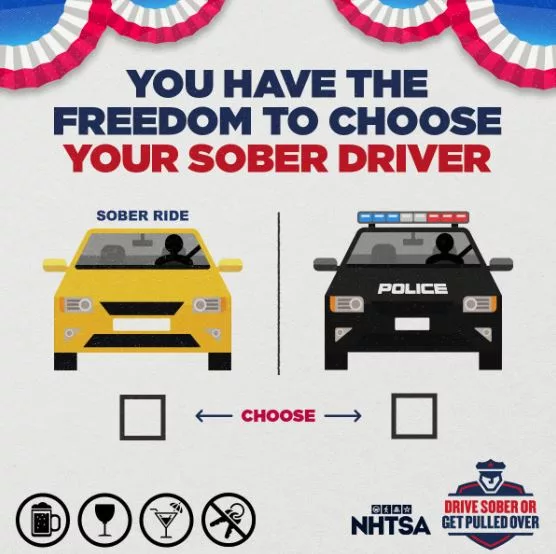
Law Enforcement officials will be taking part in the Kansas Department of Transportation’s annual safety campaign.
KDOT, the Kansas Highway Patrol, and the Kansas Turnpike Authority are encouraging drivers to practice safe driving habits.
According to KDOT, the state recorded a total of 2,158 alcohol-related crashes in 2021, with 86 of them fatal.
Drivers with a blood alcohol concentration (BAC) of .08% are considered alcohol-impaired by law, though less than that is consider buzzed driving. There were 2,226 people killed in crashes where the driver had a BAC between .01% to .07%, according to the National Highway Traffic Administration.
In addition to safe driving habits, officials are encouraging motorists to plan ahead. Having a K-TAG allows drivers to move through all zones without stopping, which improves overall safety. K-TAGs work in Oklahoma, Texas, and nearly all of Florida.
Officials are also warning of vehicle heatstroke, which is one of the leading causes of traffic-related death for children in the United States.
Since 1998, 52.6% of these tragedies occur when a child is “forgotten” by a parent or caregiver and left in a hot car, and more than half (58%) occur at a home. A busy parent or caregiver may unintentionally forget that a quiet or sleeping child, who may also be facing the back of the car, is in the back of the vehicle. Nearly one-third of these accidents occur with children under one year of age.
By the end of 2022 alone, 33 children had died due to vehicular heatstroke. The death rate has been lower in recent years, which is likely due to more families being at home and routines drastically changed. Still, an average of 38 children died each year as a result of heatstroke.
The Kansas Traffic Safety Resource Office urges all parents and caregivers to do these three things to help prevent child heatstroke:
- Make it a habit to look in the back seat EVERY time you exit the car.
- NEVER leave a child in a vehicle unattended.
- ALWAYS lock the car and put the keys out of reach.
If you are a bystander and see a child in a hot vehicle:
- Make sure the child is okay and responsive. If not, call 911 immediately.
- If the child appears to be okay, attempt to locate the parents or have the facility’s security or management page the car owner over the PA system.
- If there is someone with you, one person should actively search for the parent while the other waits at the car.
- If the child is not responsive or appears to be in distress, attempt to get into the car to assist the child — even if that means breaking a window. Many states have “Good Samaritan” laws that protect people from lawsuits for getting involved to help a person in an emergency.
Know the warning signs of heatstroke, which include red, hot, and moist or dry skin; no sweating; a strong rapid pulse or a slow weak pulse; nausea; confusion; or acting strangely. If a child exhibits any of these signs after being in a hot vehicle, quickly spray the child with cool water or with a garden hose — NEVER put a child in an ice bath. Call 911 or your local emergency number immediately.